Things to Do in Galveston: The Complete Island Guide (With an After-Dark Pick)
Galveston packs a beach town, a Victorian historic district, a major cruise port and one of the most haunted small cities in America onto a barrier island you can drive across in under an hour. Here is how to organize the island by day part, so the after-dark slot hands off naturally to a ghost walk or a harbor boat ride.
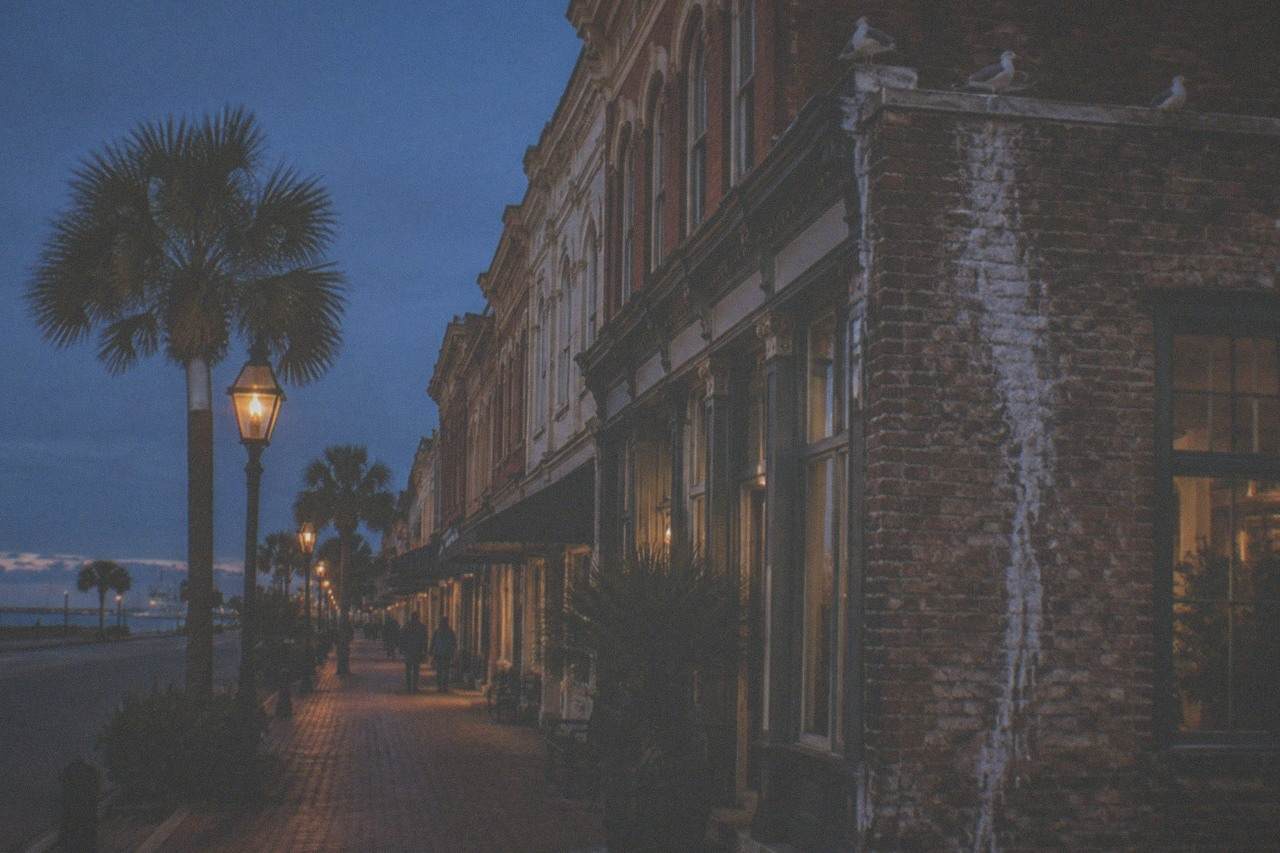
Short answer
The core Galveston list is the seawall and beaches, Moody Gardens, the Pleasure Pier, Bishop's Palace, the 1877 Tall Ship Elissa, the Strand Historic District, the 1900 Storm Memorial, and a ghost walk after dark. Walking tours run from $24, the harbor boat from $56.02, and most island attractions sit within a 15 minute drive of downtown.
Galveston Island packs nearly everything a visitor actually does inside a compact corridor between the Strand and the seawall. The island's own convention and visitors bureau describes it as "home of the deadliest natural disaster in U.S. history" and "one of Texas' most haunted destinations," which explains why the after-dark economy here is unusually developed for a beach town of this size. The plan below sorts the island into day parts, so the daylight hours fill up with beaches, pyramids and a 19th-century tall ship, and the evening hands off to the ghost walks and the harbor boat without the whole trip becoming a tour pitch.
What Are the Top 10 Things to Do in Galveston?
The top 10 are the Galveston Seawall and its beaches, Moody Gardens, the Galveston Island Historic Pleasure Pier, Bishop's Palace, the 1877 Tall Ship Elissa, the Strand Historic District, the 1900 Storm Memorial, the Grand Galvez, a harbor boat ride, and an evening ghost walk. Most of these sit within a 10 minute drive of one another, and several are walkable from downtown hotels.
The list is not ranked, because the right order depends on the season and who is traveling. Families gravitate to Moody Gardens and the Pleasure Pier. History readers spend their time on the Strand and at Bishop's Palace, the 1892 Gresham House that the Galveston Historical Foundation calls "one of the most significant of Victorian residences in the country." Beachgoers can skip the attractions entirely and still have a full weekend.
| # | Attraction | Area | Best time of day |
|---|---|---|---|
| 1 | Galveston Seawall and beaches | Seawall Blvd | Morning or sunset |
| 2 | Moody Gardens | Offatts Bayou | Midday |
| 3 | Galveston Island Historic Pleasure Pier | Seawall at 25th St | Afternoon |
| 4 | Bishop's Palace (1892) | 1402 Broadway | Midday |
| 5 | 1877 Tall Ship Elissa | Pier 21, Harborside | Midday |
| 6 | Strand Historic District | Downtown | Afternoon into evening |
| 7 | 1900 Storm Memorial | Seawall near 49th St | Anytime |
| 8 | Grand Galvez, long known as Hotel Galvez | 2024 Seawall Blvd | Afternoon tea or evening |
| 9 | Haunted harbor boat ride | Pier 21 area | Night |
| 10 | Ghost walk | Downtown or Broadway | Night |
A note on the memorial: the bronze 1900 Storm Memorial sculpture by artist David Moore was installed in 2000 along the seawall near 47th and 49th Street, and it remains the island's key commemoration site. The death toll from that storm is a recorded disagreement among official sources, with the National Hurricane Center citing 8,000 deaths and estimates from 6,000 to 12,000, the Texas State Historical Association giving 6,000 to 8,000 dead in the city, and the Galveston Historical Foundation saying at least 6,000 perished from a pre-storm population of 37,700. Any single number you see on a plaque or a blog is one source's pick, not a settled fact.
How Do I Spend a Day in Galveston?
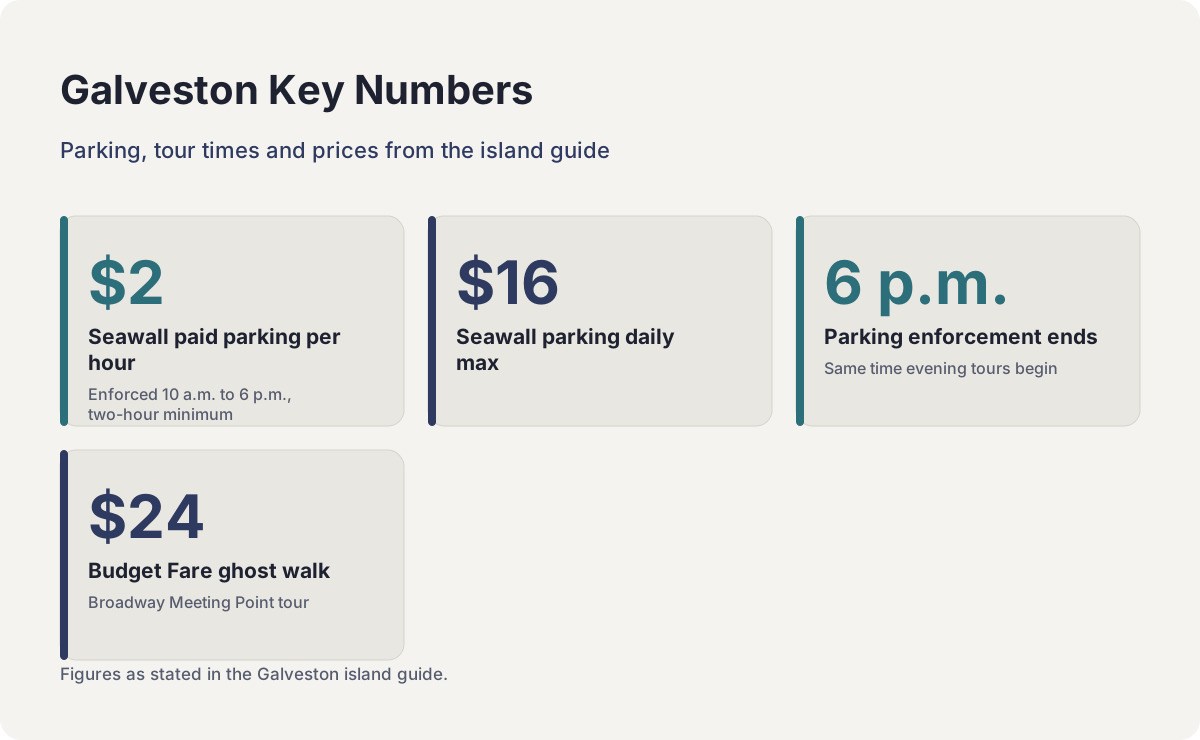
A full day splits cleanly into three blocks: morning on the seawall or the beach, midday at Bishop's Palace, the Elissa or Moody Gardens, and late afternoon into evening on the Strand, ending with a night tour. Driving between blocks takes under 15 minutes, and downtown parking ends enforcement at 6 p.m., which is exactly when the evening tours begin.
Start with coffee on the Strand, then walk the district while the shops are open. The Strand Historic District is a National Historic Landmark designated on May 11, 1976, per the official National Park Service list of National Historic Landmarks, and its Victorian commercial buildings hold the highest concentration of historic structures in the guide. By late morning, drive or ride to Bishop's Palace at 1402 Broadway for a self-guided visit; the Galveston Historical Foundation runs them daily from 10 a.m. to 5 p.m. with the last ticket at 4 p.m., and the Basement-to-Attic tours run on scheduled dates.
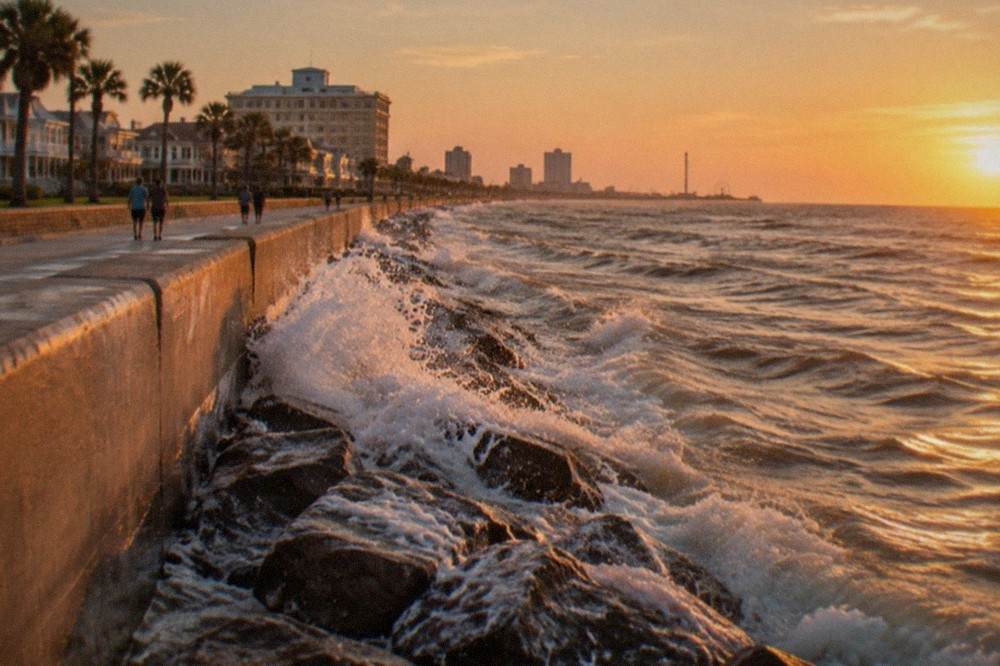
Midday is the right slot for Moody Gardens' pyramids or the Pleasure Pier, both of which are hotter and more crowded in the afternoon. Return to the seawall for sunset, which is the island's best free show, then head back downtown. This is where the day hands off to the after-dark economy: the walking ghost tours run 6, 8 and 10 p.m. slots, the pub crawl starts at 8 p.m., and the harbor boat runs multiple night departures in roughly the 7:30 to 10:30 p.m. range. If you want the full logic of the evening options, the Galveston after dark guide breaks down every night tour by start time and age rule.
| Day part | Block | Notes |
|---|---|---|
| Morning | Strand walk, coffee, shops | District is compact and shaded |
| Late morning | Bishop's Palace | Self-guided daily 10 to 5, last ticket 4 |
| Midday | Moody Gardens or Elissa at Pier 21 | Elissa is at the Historic Seaport |
| Afternoon | Pleasure Pier or beach | Peak heat and crowds |
| Sunset | Seawall | Free, no ticket needed |
| Night | Ghost walk, pub crawl or harbor boat | 6, 8, 10 p.m. slots on the walks |
For a longer stay, the weekend itinerary for Galveston stretches this same skeleton across two or three days without repeating a block.
What Is There to Do on the Galveston Seawall and Beaches?
The seawall offers a long, driveable, walkable boulevard with free beach access at the east end, paid parking at $2 per hour from 10 a.m. to 6 p.m., and the 1900 Storm Memorial near 49th Street. Free parking exists in designated north-side stretches, including between 12th and 19th and 33rd and 39th Streets.
The wall itself is the island's defining engineering fact. Begun after the 1900 Storm, the original wall ran six miles and stood seventeen feet above mean low tide, per the Texas State Historical Association. The Galveston Historical Foundation goes further and calls the seawall plus the grade raising "the largest civil-engineering project in U.S. history," its own phrasing, and the numbers behind it are real: sand pumped from the Gulf floor raised the city grade by as much as seventeen feet, a project that required lifting 2,146 buildings in advance along with streetcar tracks, fireplugs and water pipes. The wall proved itself in the 1915 hurricane, when only 11 people died within city limits.
Beach-wise, the east-end beaches near the ferry landing and the Stewart Beach area are the classic picks, and the seawall's rock revetment makes the drive itself scenic even when you never leave the car. Parking is the one logistics trap. The city enforces seawall paid parking from 10 a.m. to 6 p.m. at $2 per hour with a two-hour minimum and a $16 daily max, while the free north-side stretches fill early on summer weekends. Downtown is a separate system entirely, at $2.25 per hour from 9 a.m. to 6 p.m., so a day that mixes the seawall and the Strand touches two different payment zones.
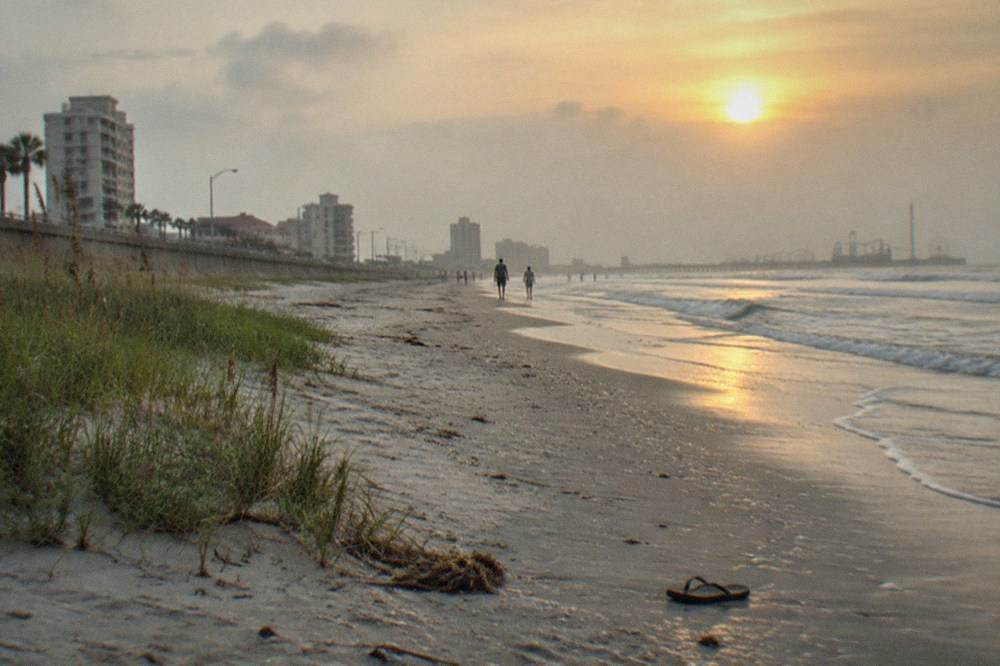
If your evening plan is a ghost walk and your budget is tight, the seawall sunset is the perfect free warm-up. The lowest-priced guided walk on the island, the Budget Fare, Broadway Meeting Point tour at $24, starts just a few blocks off Broadway, so a sunset on the wall flows straight into a 8 p.m. tour without moving the car.
Where Are the Best Family Attractions: Moody Gardens and the Pleasure Pier?
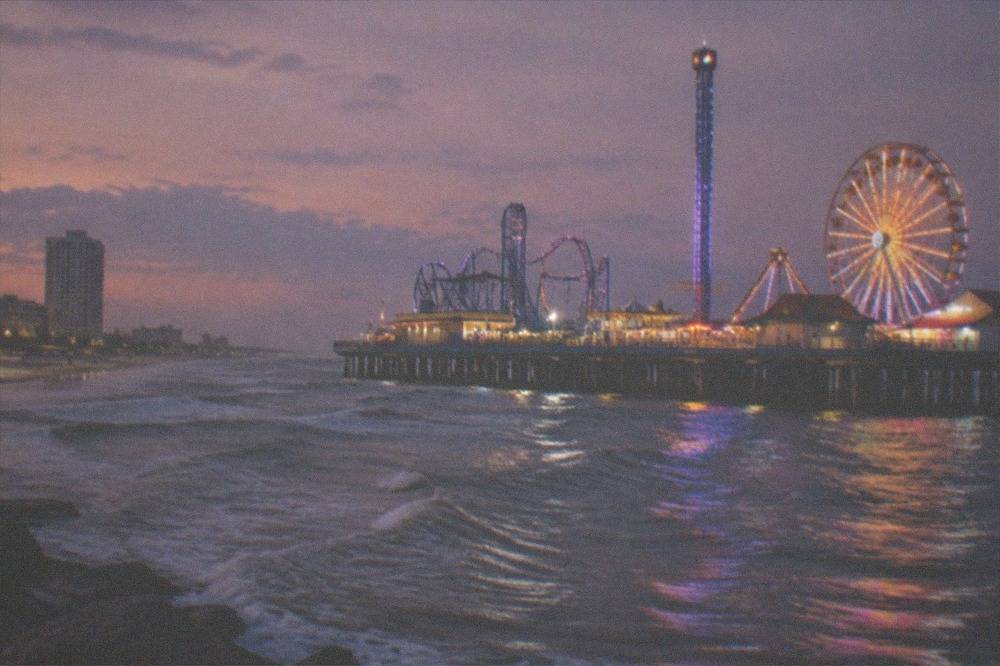
Moody Gardens holds three pyramid attractions, an aquarium, a rainforest and a discovery museum, plus a golf course and a hotel, all on the island's northeast side. The Galveston Island Historic Pleasure Pier is a classic amusement pier over the Gulf at 25th Street on the seawall, with rides, games and a fishing-friendly layout.
The two serve different moods. Moody Gardens is the rainy-day and small-child answer: the Rainforest Pyramid and the Aquarium Pyramid are indoors, so a Gulf Coast downpour does not end the day, a real consideration in a city where the operators of the walking tours explicitly run rain or shine and schedule indoor bar time on the pub crawl. The Pleasure Pier is the opposite bet, an amusement pier rebuilt on the historic site of the old Pleasure Pavilion, best in the late afternoon when the heat breaks and the rides light up.
Pricing at both attractions varies by season and package, so check the operators' own pages for current figures rather than any number printed here. What is fixed is the geography: Moody Gardens sits off Offatts Bayou about 10 minutes from downtown, and the Pleasure Pier sits directly on the seawall, which means a pier afternoon can share a parking session with the sunset and the memorial. Families doing both in one day should do Moody Gardens first, because the pier is better in the last three hours of daylight.
For families whose kids are old enough for stories but young enough to spook easily, the age rules on the night tours matter: the walking tours are all-ages, the Shadows of Revelry walk is 16 and over, and the pub crawl is strictly 21 with ID. The ghost tours for kids guide sorts every option by age.
Can You Tour the Historic Mansions and the 1877 Tall Ship Elissa?
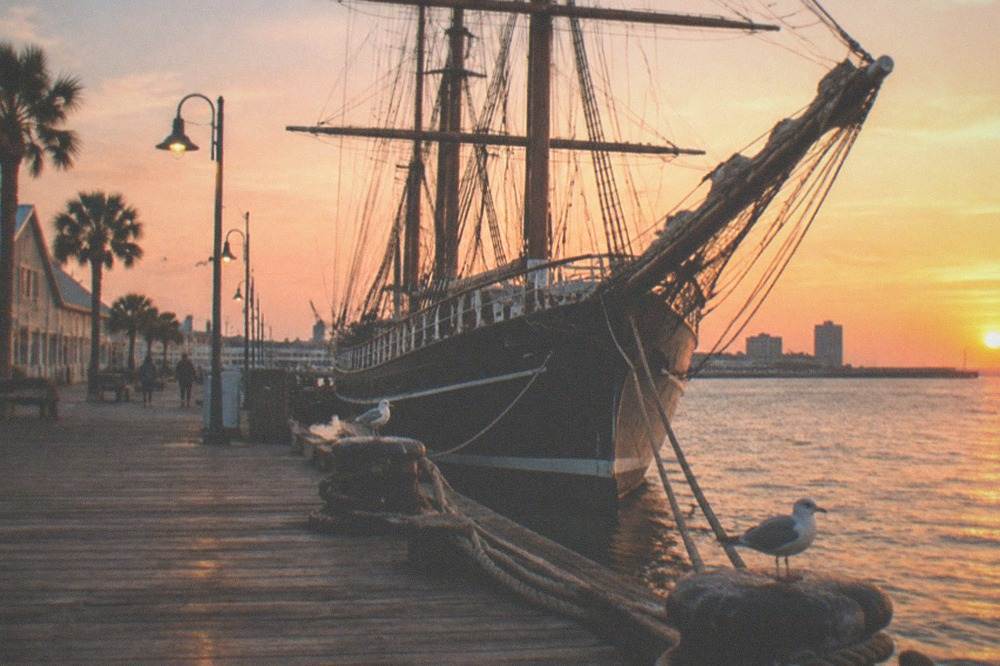
Yes, and both are working visits, not photo stops. Bishop's Palace takes self-guided tours daily from 10 a.m. to 5 p.m. at 1402 Broadway, and the 1877 Tall Ship Elissa, itself a National Historic Landmark, is berthed at the Galveston Historic Seaport on Harborside Drive, where you can walk her decks.
Bishop's Palace, also called the Gresham House, was built in 1892 and sits in the East End Historic District, which shares the Strand's May 11, 1976 National Historic Landmark designation. The Galveston Historical Foundation runs the property and schedules occasional Basement-to-Attic tours on set dates, which are the deepest look inside. Ashton Villa at 2328 Broadway, built in 1859 by James Moreau Brown, is the other great mansion of the Broadway row, with brick walls 13 inches thick and an air space; guides on the ghost walks tell the legend of his eccentric daughter Bettie Brown, whose apparition they say has been seen, an operator claim and a good story, not documented history.
The Elissa is the quieter star. The bark Elissa, launched in 1877, appears on the National Park Service's landmark list in its own right, and she is one of the oldest operating tall ships still sailing. She docks at the Historic Seaport on Harborside Drive, the same Pier 21 area where the harbor boat tours board, so a midday ship visit and a night boat ride can share a parking spot.
The Strand ties the historic district together. For the full district walkthrough, including the Tremont House and the Sealy-Hutchings Building whose staircase ghost the Strand tours narrate, read the Strand Galveston guide.
Is Galveston a Cruise Port Worth Arriving Early For?
Yes. The Port of Galveston is the fourth most popular cruise home port in the United States, moving almost 4 million passengers a year through four terminals, and it sits within walking distance of the Strand and the Historic Seaport. Houston Hobby is about a 45 minute drive and Bush Intercontinental about 1.5 hours.
The port's own numbers describe the scale: a $7.3 billion economic impact, 23,683 direct and indirect cruise and cargo jobs, and 3 million cargo tons a year, all on an 840-acre port that has been a maritime commercial center since 1825. For a visitor, the practical fact is that the terminals sit at the foot of the Strand district, so a pre-cruise afternoon in Galveston is not a detour, it is the neighborhood.
That makes Galveston one of the rare cruise ports where arriving a day early genuinely improves the trip. A cruise passenger with a 4 p.m. boarding slot can do the Elissa, the Strand and lunch, then walk to the terminal. An evening-before arrival opens the after-dark slot too, and that is where the island's ghost economy shines: the Historic District Walk, 1.5 Hours tour, the most reviewed product on the island's tour roster at 4.8 across 1,802 reviews from $33, meets at the 24th and Sealy gazebo across from the Rosenberg Library, a five minute drive or a 15 minute walk from the cruise terminals. The full comparison of every walking tour, pub crawl and boat, with prices and review counts side by side, is in the best haunted tours compared guide.
| Cruise-day scenario | Feasible before boarding | Time needed |
|---|---|---|
| Same-day arrival from Hobby | Strand walk and lunch | 2 to 3 hours |
| Same-day arrival from IAH | Elissa or Bishop's Palace, one only | 1.5 to 2 hours |
| Night before, downtown hotel | Full day plan plus a night tour | Evening slot |
| Night before, seawall hotel | Sunset, memorial, 8 or 10 p.m. walk | Evening slot |
What Should You Do After Dark in Galveston?
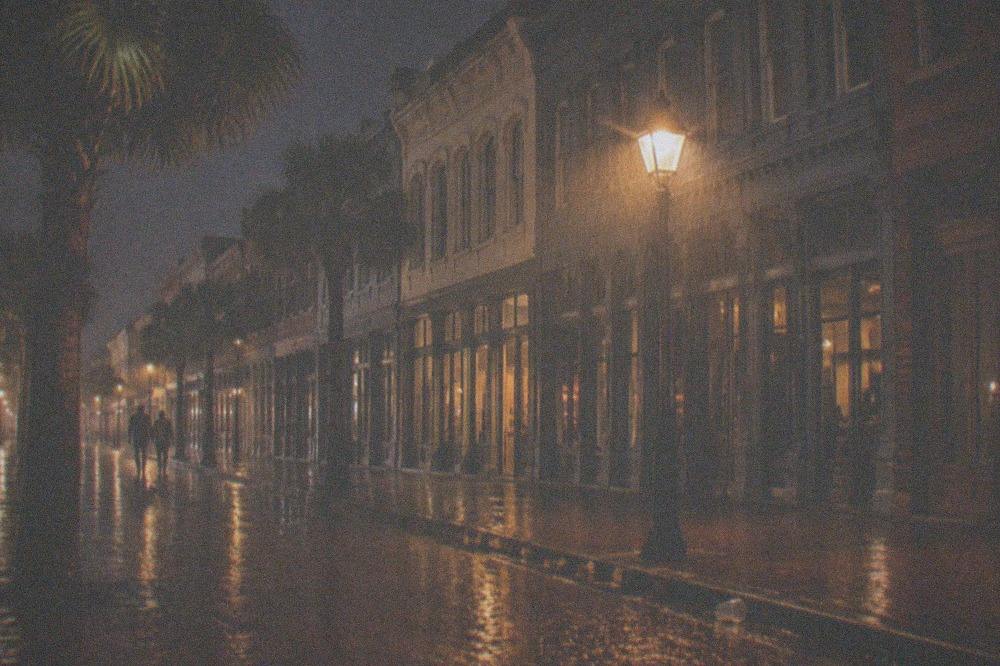
After dark the island shifts from beach town to ghost town. The walking tours run 6, 8 and 10 p.m. slots, the pub crawl starts nightly at 8 p.m. for the 21-and-over crowd, and the haunted harbor boat runs multiple night departures in roughly the 7:30 to 10:30 p.m. range year-round with no jump scares, which makes it the family pick.
The evening roster is deeper than most visitors expect, and it is organized enough to plan around. The Budget Fare, Broadway Meeting Point walk at $24 is the cheapest guided option, 1.5 hours from 2328 Broadway, and it carries a 4.7 rating from 75 reviews. The Cemetery Walk with costumed guides, from $31, meets at the Old City Cemetery gates at 40th and Avenue K and is the most distinctive format on the island. The adults-only Shadows of Revelry walk is 16 and over, from $34.99. The pub crawl, 2 hours from $34.99, is strictly 21 with valid ID, covers about a mile at a leisurely pace, and drinks are available for purchase at the stops, not included in the ticket.
The harbor boat is the format change. The Nighttime Harbor Boat Ride runs from the Pier 21 area kiosk at 2100 Harborside Drive, 1.5 hours from $56.02, with a 4.8 rating across 448 reviews, and it narrates the 1900 Storm, pirates and shipwrecks from the water. It is family-friendly with no jump scares, which positions it as the night out for families with younger kids who are not ready for a cemetery walk.
One logistics note for the evening: the entertainment district allows to-go drinks in plastic cups under 16 ounces from 11 a.m. to 11:59 p.m., but the ghost walks are outdoor walking tours with no bathroom along the route, so plan the last drink accordingly. And if rain rolls in, the tours run anyway; the operators' own pages promise reschedule or refund for heavy rain, and the pub crawl builds in indoor bar time. The do ghost tours run in rain article covers the full weather logic.
When Is the Best Time of Year to Visit Galveston?
October is the sweet spot: the summer heat breaks, the water is still warm, and the island runs its full haunted season, including the Ghost Coast Festival over October 9 to 11, 2026 with paranormal investigations at the League Kempner Mansion. December brings Dickens on The Strand, the Victorian festival's 53rd annual edition, December 4 to 6, 2026.
The calendar year on the island has three real seasons. Summer is beach season, hot, humid and family-crowded, with seawall parking at a premium. Fall is festival and haunting season, anchored by the anniversary of the 1900 Storm on September 8, when the Galveston Historical Foundation holds its annual public memorial at the 1900 Storm Memorial at 49th and Seawall, and the Rosenberg Library Museum's exhibit on the storm, which opened as the first exhibition solely focused on the disaster at that library. Winter is mild and event-driven, with Dickens on The Strand, held the first weekend in December by the Galveston Historical Foundation, turning the Strand into Victorian London.
Spring is the wildcard: warm, less crowded, and outside the June 1 to November 30 Atlantic hurricane season with a peak around September 10, per the National Hurricane Center's climatology page. Trip insurance matters more in September than in any other month.
How Many Days Do You Need in Galveston?
Two full days covers the core list comfortably: day one for the seawall, Moody Gardens or the Pleasure Pier and a sunset, day two for the Strand, Bishop's Palace, the Elissa and a night tour. A single day works only if you cut the family attractions, and three days lets you add the ferry, the East End and a second night tour.
The island rewards a slow pace more than a packed one. The drive times are short, but the experiences are not: Bishop's Palace alone can take 90 minutes, the Historic Seaport with the Elissa is a solid half afternoon, and the Strand changes character between the shopping hours and the evening. Cruise passengers on a pre-cruise schedule should treat the day-part plan above as a menu, not a checklist, and pick one block per half-day.
Once the Strand takes on its evening mood, a haunted cemetery tour makes a natural pick for the after-dark block, when the island's storm-worn past feels most present.
Budget-wise, the island scales. The free tier is real: the seawall sunset, the ferry ride, the 1900 Storm Memorial, the Strand's architecture and the memorial events. The paid tier starts at $24 for the cheapest guided walk and climbs through the attractions. The free things to do in Galveston guide builds a full no-spend day, and the Galveston ghost tour prices guide lays out both price layers on the tours, the listing from-prices and the operators' direct box-office rates.
For the paid tier, the Walk with the Dead tour is the natural starting point, tying the storm history behind the free memorial to the haunted blocks of the Strand.
The box-office layer is worth knowing before you book anything. The Historic District operator's own page prices its walks at $30 for adults and $22 for children ages 3 to 12, with active-duty military, police and fire always free, no ticket needed. Those direct rates and the live listing from-prices are two real price layers, not a contradiction, and each is labeled as itself on the operators' pages.
With both price layers explained, you can head to the Ghost on the Strand tour page and judge the ticket on the terms you now know.
For the evening, all twelve bookable ghost tours are compared on Galveston Ghost Tours with prices, ratings and meeting points, so the after-dark pick can be made from real numbers rather than marketing copy.
Where Should You Eat and Stay on the Island?
Stay downtown if the trip is history-and-ghosts weighted, on the seawall if it is beach weighted, and near the port if you are cruising. Eat on the Strand for atmosphere and on Postoffice Street for the local restaurant row; both are walkable from every downtown hotel.
The lodging geography follows the attraction geography. Downtown puts you within a 10 minute walk of the Strand, the Historic Seaport, the cruise terminals and the meeting points of most walking tours. The seawall puts you on the beach with the sunset and the memorial, at the price of a 10 minute drive to downtown. The Grand Galvez, long known as Hotel Galvez, at 2024 Seawall Boulevard is the island's landmark hotel, a 1911 property refurbished as a Marriott Autograph Collection property; its own ghost program promotes the celebrated story of the Ghost Bride, and the hotel runs its own tours, though this site routes bookings to the independent walking tours.
The Ghost Bride may be the hotel's signature spirit, but she is hardly alone, and the historic Galveston ghost tour introduces the rest of the island's restless residents.
Dining is concentrated in two zones. The Strand holds the tourist-facing restaurants and the pubs the crawls visit, including Brews Brothers at 2404 Strand, named across the crawl listings. Postoffice Street, one block south, holds the restaurant row locals actually use. For a night out, the entertainment district's to-go cup rule means a walk between venues with a drink is legal from 11 a.m. to 11:59 p.m., which the pub crawl's about-a-mile route quietly takes advantage of.
| Trip type | Where to stay | Evening advantage |
|---|---|---|
| History and ghosts | Downtown / Strand | Walk to tour meeting points |
| Beach weekend | Seawall | Sunset from the room |
| Cruise pre-night | Near the port | Walk to terminals |
| Family trip | Seawall or Offatts Bayou | Close to Moody Gardens and the pier |
Common Questions About Things to Do in Galveston
What are the top 10 things to do in Galveston?
The seawall and beaches, Moody Gardens, the Pleasure Pier, Bishop's Palace, the 1877 Tall Ship Elissa, the Strand Historic District, the 1900 Storm Memorial, the Grand Galvez, a haunted harbor boat ride, and an evening ghost walk. All ten sit within a short drive of one another.
How do I spend a day in Galveston?
Morning on the Strand, late morning at Bishop's Palace, midday at Moody Gardens or the Elissa, afternoon at the Pleasure Pier or the beach, sunset on the seawall, and a night tour downtown. Downtown parking enforcement ends at 6 p.m., right as the evening tours begin.
what to do in galveston when it rains?
Moody Gardens' pyramids, Bishop's Palace, the Elissa, the Rosenberg Library's 1900 Storm exhibit and the Strand shops are the indoor picks. The ghost tours also run rain or shine, with reschedule or refund for heavy rain, and the pub crawl builds in indoor bar time.
how long is the galveston ghost tour?
The guided walks run 1.5 hours. The pub crawl runs 2 hours, the harbor boat 1.5 hours, and the Segway tour 2 hours with a 30 minute early arrival for training.
Is Galveston worth visiting for more than the beach?
Yes. The island holds a National Historic Landmark district, a National Historic Landmark tall ship, a major cruise port and one of the most developed haunted-tour rosters in Texas, with twelve bookable products from $24.
What is free to do in Galveston?
The seawall sunset, the 1900 Storm Memorial, the Port Bolivar ferry ride, the Strand's architecture and the annual September 8 memorial event are all free, and active-duty military, police and fire walk free on the Historic District and Strand tours.